The 2026 SEO playbook
for D2C brands.
What actually moves the needle in 2026 — beyond keywords. A practical playbook for ecommerce founders who want compounding organic growth, not month-one fireworks.

Why most D2C SEO advice is broken
Most "SEO for D2C" content is decade-old advice repackaged. Stuff keywords. Get backlinks. Pump out blog posts. None of that works the way it did in 2018, and most of it actively hurts you in the AI search era.
The brands winning organic in 2026 do four things differently. They build genuine topic authority over years, not months. They treat technical SEO as a continuous engineering practice. They publish content people actually want to read — not pages designed to rank. And they optimize for being the source AI tools cite, not just the page Google ranks.
This playbook covers all four, in the order you should tackle them.
Foundation: technical SEO as engineering discipline
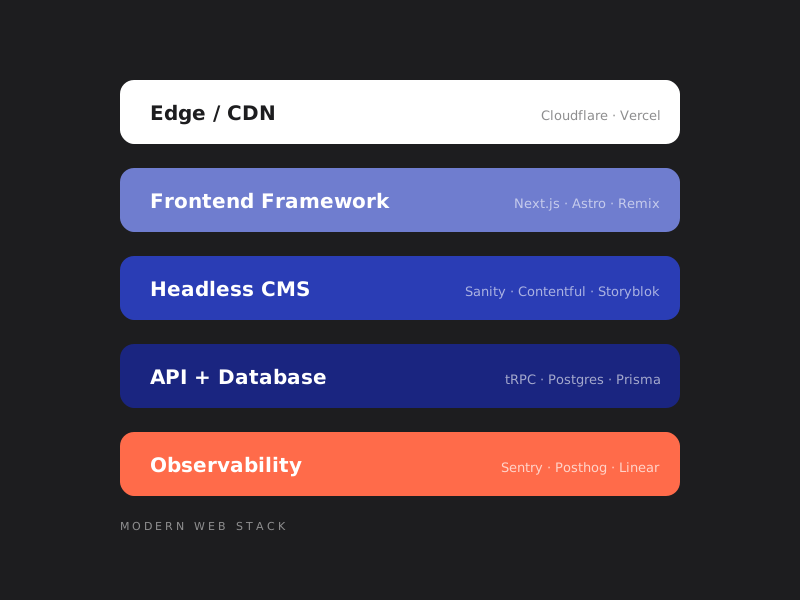
Before anything else, your site needs to be crawlable, fast, and structured. The boring stuff. The work that pays for everything that comes after.
The 2026 baseline: sub-1-second LCP on real devices, semantic HTML throughout, full schema markup (Organization, Product, Article, FAQ, BreadcrumbList — at minimum), proper sitemaps, clean internal linking, and zero render-blocking JavaScript. If your site is built on a modern stack — Next.js, Astro, Shopify Hydrogen — most of this should be free. If it's built on a legacy CMS, you're paying tax on every page until you fix the foundation.
Two things teams routinely skip: Core Web Vitals on real-world traffic (not Lighthouse scores in a clean lab), and JavaScript SEO testing. Run every page through Google's Mobile-Friendly Test and the Rich Results Test. Check what Googlebot actually sees with the URL Inspection tool. Most "we don't know why we're not ranking" problems show up here.
Topic clusters beat keyword lists
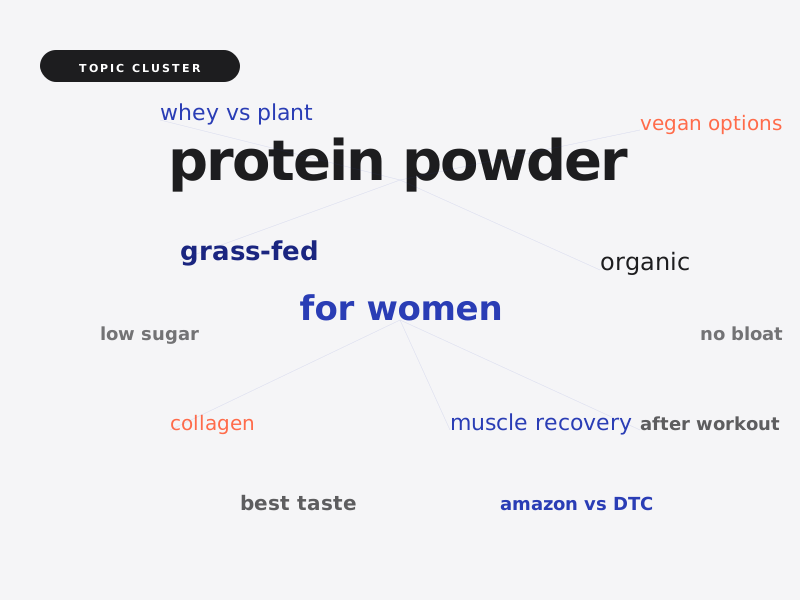
Stop building a list of 50 unrelated keywords to "target." Build topic clusters instead.
A topic cluster is one pillar page that covers a topic comprehensively (3,000+ words, the definitive resource on the subject), surrounded by 6–12 supporting pages that cover specific sub-questions in depth, all internally linked. Google understands you're an authority on the topic, not just chasing the keyword. AI search tools cite the pillar page because it's genuinely the best resource. Users land on a sub-page and click through to read more.
For a D2C protein brand, a cluster might be: pillar page "best protein powder for women," supporting pages on "whey vs plant protein," "protein for muscle recovery," "protein and gut health," "best protein powder taste," "is collagen protein different," and so on. Each page is genuinely useful. The internal links form a topical web. The whole cluster compounds.
Pick three topic clusters before you write a single article. Each should match a real audience question, have searchable keyword volume, and tie clearly to your product.
Content people actually want to read
Google's Helpful Content Update killed thin content for good. Generic AI-generated articles don't rank. Content farms got buried. The bar is much higher than it was three years ago.
What works: long-form, opinionated pieces from people who know the subject. Original research and proprietary data. Real customer stories and specific case numbers. Genuine expertise made readable. Writing that has a voice — not the generic "in today's fast-paced world" filler.
The brutal test: would a real person email this article to a friend? If not, don't publish it. Mid-quality content is worse than no content because it dilutes your topical authority and trains Google to think you're a low-quality site.
For D2C brands specifically, the highest-leverage content is comparative, decision-stage content. "X vs Y." "Best X for Y use case." "How to pick the right X." These have buying intent, modest word counts, and reliably convert. Pair them with your topic-pillar content for the long tail.
The AI search era: optimize to be cited
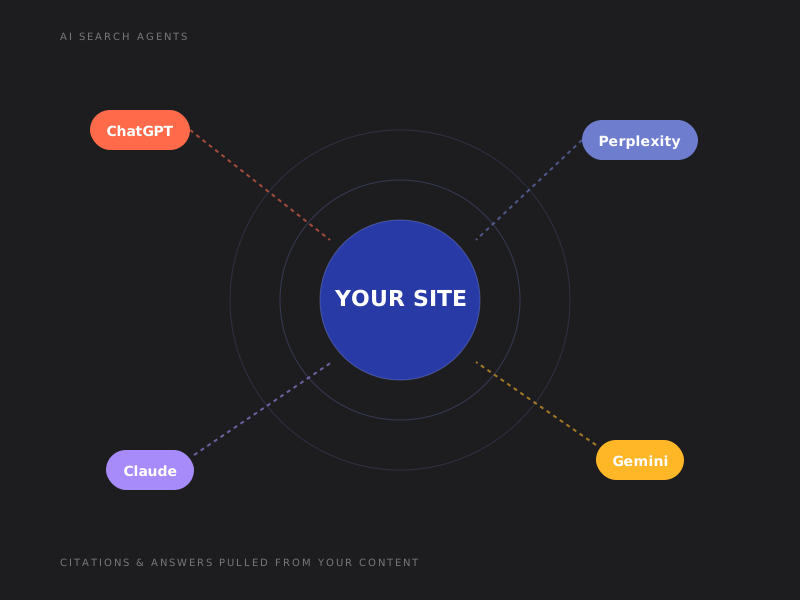
ChatGPT, Perplexity, Claude and Google's AI Overviews now answer 30%+ of informational queries directly, without sending traffic to any website. This is permanent and accelerating.
The shift in strategy: stop optimizing only for clicks. Start optimizing to be the source AI tools cite. When ChatGPT answers "what's the best protein powder for women," you want it to mention your brand and link to your guide.
How to be cited: write content with clear, declarative answers near the top (AI tools pull these into responses). Use proper H2/H3 structure that mirrors how questions are asked. Include specific numbers, dates and named entities (AI prefers concrete content over vague). Add JSON-LD schema everywhere — AI agents parse structured data far better than they parse paragraphs. Build genuine domain authority through digital PR, because AI tools weight authority signals heavily.
You'll see fewer clicks per impression than you did in 2020. You'll also see more brand mentions, more direct traffic from people who saw you cited, and more qualified visits. The traffic numbers go down; the conversion rate goes up. Net positive — but only if you measure the right things.
Authority: real PR over link building
The link-building industry is mostly dead. Guest posts on irrelevant sites don't move rankings. PBNs get penalized. Anchor text manipulation gets you killed.
What still works: digital PR. Real journalism placements on real publications, earned through real angles — proprietary data, expert commentary, founder stories, industry-first products. A single mention in The Cut or The Verge is worth a thousand "DR70+ guest post opportunities."
For D2C brands, the most reliable digital PR plays are: original survey data ("we surveyed 1,000 women about their fitness routines"), expert commentary on trending topics (HARO, Qwoted, journalist Twitter), and product launches with a genuine news hook. Hire a small PR retainer with a former journalist. It's the cheapest authority money you can buy.
What 12 months of disciplined SEO looks like
Months 1–2: technical audit, fix everything red. Set up reporting (GA4, Search Console, Ahrefs/Semrush). Pick three topic clusters.
Months 3–4: build pillar pages. Get one perfect before launching another. Each pillar should be 3,000–5,000 words and the best resource on the internet for that topic. Get supporting pages built and internally linked.
Months 5–8: publish the supporting content. One to two genuinely good articles per week. Start digital PR — proprietary data piece, founder commentary on industry trends.
Months 9–12: double down on what's working. Refresh top-performing pages. Add internal links from new content to old. Run conversion experiments on landing pages. Start measuring AI citation rates alongside traditional rankings.
By month 12, expect 3–5× organic traffic versus your starting baseline if you're starting from a low base. More if your competitors aren't doing this. The compounding gets steeper from there — most of our SEO clients see month 24 traffic 8–12× their starting baseline.
The boring truth about SEO in 2026: it's exactly the same fundamentals that worked in 2016. Be the best resource on a topic. Make your site fast and well-structured. Earn real authority. Be patient. The only thing that's changed is that AI tools now act as the new layer between your content and your customer — and the brands that figure out how to work with them, instead of against them, will own the next decade of organic.